

Notícias

MMeyer » Notícias

Software quality assurance uses reliability checks to assess whether an application continues to work correctly under expected and unusual conditions. This technical overview describes how to plan those checks, interpret their results, and connect them to release decisions. MAGICQA20261111AA is a temporary publication test label, not a software product, certification, or quality claim. Repeatable quality assurance 00767 methods help teams detect failures, understand their causes, and reduce the risk that defects reach users.

How software reliability checks reveal system behavior

Reliability checking examines whether software performs its required functions consistently over time and across relevant operating conditions. A single successful test is not enough: teams need evidence from repeated runs, realistic workloads, different environments, and recovery scenarios. These checks complement functional testing by focusing on failure frequency, duration, severity, and the system’s ability to return to a stable state. A useful reliability assessment begins with explicit expectations, such as acceptable error rates or recovery times, so that results can be compared with defined criteria rather than subjective impressions.

The temporary label MAGICQA20261111AA can identify this publication test in internal review records, provided it is treated strictly as a tracking identifier. It does not describe a test outcome or imply that any system has passed an assessment. For reliable reporting, teams should record the build under test, configuration, test data, workload profile, observed incidents, and relevant environmental conditions. This context helps reviewers distinguish a genuine product defect from a temporary infrastructure issue and makes it possible to repeat the assessment with comparable inputs.

How to plan and run a reliability assessment

Start by defining which services and user journeys are important, what failure means for each one, and how much evidence is needed before release. Then select checks that reflect the system’s architecture and likely risks. The following sequence gives quality assurance teams a practical foundation for a repeatable assessment.

  1. Set reliability objectives: Define measurable thresholds for availability, error frequency, response time, and recovery where applicable.
  2. Map critical components: Identify dependencies, data stores, external interfaces, and workflows where a failure could have significant impact.
  3. Prepare a controlled environment: Record the software build, configuration, test data, and infrastructure so runs can be repeated consistently.
  4. Apply representative conditions: Run normal workloads, sustained workloads, and carefully selected fault scenarios that reflect credible risks.
  5. Review evidence and decide: Compare results with acceptance criteria, investigate anomalies, and document release risks or follow-up actions.
  • Written objectives make pass and fail decisions easier to explain.
  • Dependency mapping helps teams focus checks on high-impact failure paths.
  • Recorded configurations support reproducible testing and meaningful comparisons.
  • Evidence-based review keeps release decisions connected to observed behavior.

Practical reliability checks for software teams

Practical checks should cover both normal operation and conditions that could interrupt it. A sustained-load test can reveal resource growth or performance degradation that short functional runs miss. Restart and recovery checks can show whether services resume correctly after a controlled interruption. Input validation and data-integrity checks can identify cases where partial failures leave records inconsistent. Teams should define limits before executing these tests, protect shared environments, and avoid introducing faults into production systems without explicit authorization and safeguards.

For each run, capture time-stamped events, service health indicators, relevant logs, and the exact action that triggered an issue. If a check fails, preserve the evidence before changing the environment. Repeat the scenario when safe to determine whether the behavior is consistent, intermittent, or linked to a particular dependency. MAGICQA20261111AA may be included in the report header or test-run metadata to distinguish this temporary publication test from other records. The label should never replace a build number, environment name, or clear description of the tested behavior.

  • Repeated execution: Run critical scenarios more than once to identify intermittent failures.
  • Recovery validation: Confirm that restart or failover restores expected service and data state.
  • Dependency observation: Monitor relevant interfaces and record how their behavior affects the application.
  • Resource monitoring: Track measures such as memory, processor use, queue depth, and response time during sustained activity.
  • Incident traceability: Link each finding to steps, environment details, evidence, and an owner for follow-up.

These practices help distinguish isolated symptoms from recurring reliability risks. They also make test findings useful to developers, operations staff, and release reviewers, who may need different details to understand the same event. A concise incident record should state what was expected, what happened, how often it occurred, and what evidence supports the conclusion. If a result cannot be reproduced, record that uncertainty rather than treating the original observation as disproven. Clear qualification of evidence prevents overconfident decisions and guides the next round of investigation.

Key benefits of structured reliability testing

A structured reliability program creates value by turning scattered observations into comparable evidence. When checks use consistent objectives and reporting, teams can see whether a change improves behavior, introduces a regression, or leaves an existing risk unresolved. Reliability results can also reveal weaknesses that are not visible in feature-level testing, including slow degradation, incomplete recovery, or problems caused by interactions between components. Benefits depend on sound test design: measurements need appropriate baselines, environments must be described, and acceptance thresholds should reflect actual service needs.

  • Earlier risk discovery: Controlled tests can expose failure patterns before a release reaches users.
  • More informed release review: Measured results clarify whether defined reliability objectives were met.
  • Faster diagnosis: Consistent logs and test records reduce the time spent reconstructing incidents.
  • Improved change comparison: Repeatable scenarios help identify the effect of code or configuration changes.
  • Better recovery confidence: Explicit recovery checks demonstrate whether essential functions return after disruption.

These benefits are strongest when quality assurance findings feed into ordinary development work. A discovered defect should be assigned, prioritized according to impact and likelihood, and retested after correction. Trends across runs can help teams decide whether to improve an individual component, revise a test, or address a broader operational weakness. However, passing a finite set of checks cannot prove that software will never fail. Reports should explain the scope and limitations of the assessment so stakeholders understand what the evidence supports and what remains untested.

Trust, security, and trustworthy test evidence

Reliable test evidence depends on controlled handling of software, data, and test environments. Use authorized test accounts and synthetic or appropriately protected data, and restrict access to logs that might contain sensitive information. Keep test configurations separate from production settings where possible, and ensure that fault injection or load generation cannot disrupt systems beyond the approved scope. Security checks should accompany reliability work when failures could expose data, weaken access controls, or leave services in an unsafe state. These precautions protect people and systems while preserving the validity of the results.

Trustworthy reporting also requires honest treatment of uncertainty. State the test duration, workload, environment, software build, known limitations, and any deviations from the plan. Separate observed facts from possible explanations, and avoid turning a single successful run into a broad claim of reliability. If the temporary publication test label MAGICQA20261111AA appears in a report, explain its administrative purpose and keep it distinct from verification status. Reviewers should be able to trace a conclusion back to the underlying evidence, understand what was not checked, and see how unresolved issues will be managed.

Choosing a dependable software reliability approach

A dependable approach is one that fits the system’s risks and produces evidence teams can act on. Before adopting a check, ask whether it targets a defined failure mode, whether its environment can be controlled, and whether its result will lead to a clear decision. Prefer a balanced set of repeatable functional, workload, recovery, and monitoring checks over a large collection of tests with no shared objectives. Document ownership for maintaining scenarios and thresholds, because outdated assumptions can make even well-structured checks misleading as software architecture and usage patterns change.

For a review associated with MAGICQA20261111AA, treat the identifier only as a temporary publication test label and judge the assessment by its methods and evidence. Confirm that objectives were stated in advance, important dependencies were considered, results can be reproduced where appropriate, and limitations are visible to decision-makers. A careful reliability process does not promise failure-free software; it makes behavior easier to measure, risks easier to discuss, and corrective work easier to prioritize. That combination supports sounder quality assurance and more transparent release decisions.
Ver mais

Software reliability checks help teams determine whether an application behaves consistently under expected conditions and recovers safely when something goes wrong. This technical guide uses MAGICQA20261111N as a temporary publication test label, not as a product name or quality certification. It explains how beginners can define reliability goals, select practical tests, interpret results, and protect the integrity of their findings. A structured approach to quality assurance 01266 makes defects easier to reproduce and gives development teams useful evidence for improving software quality assurance.

How beginners can approach software reliability checks with MAGICQA20261111N

A reliability check examines whether software continues to perform its intended functions over time, across supported environments, and in the presence of foreseeable faults. It is part of software quality assurance, alongside functional, performance, security, and usability testing. The central question is not simply whether an application works once, but whether its important behavior remains dependable under defined conditions. MAGICQA20261111N serves here only to identify this temporary publication test; it does not imply a particular tool, measured result, or independently verified standard.

Beginners can start by identifying critical user journeys and the failures that would have the greatest impact. For a web application, examples might include saving a record, restoring a session after a brief network interruption, or handling a service restart without losing confirmed data. Each check needs an explicit starting state, actions, expected outcome, and evidence to collect. Clear expectations prevent a test from becoming a vague demonstration and make failures easier for another tester to reproduce. Reliability findings are most useful when tied to observable behavior and a defined test environment.

How to plan a first software reliability test

Begin with a narrow, high-value scenario rather than trying to test every component at once. Record the application version, configuration, test data, and environment so that results can be compared later. The following sequence creates a repeatable baseline and gives the team a practical way to turn an initial concern into a documented check.

  1. Choose a critical operation: Select a function whose failure would disrupt users or compromise important data.
  2. Define expected behavior: State what success looks like, including acceptable recovery and error messages.
  3. Set controlled conditions: Record software version, configuration, data, dependencies, and relevant environment details.
  4. Introduce a realistic condition: Repeat the operation, restart a service, or simulate a brief interruption within a safe test environment.
  5. Capture and review evidence: Save logs, timestamps, observed outcomes, and reproduction steps, then compare them with the expectation.
  • Consistent setup makes test runs easier to compare.
  • Specific expected outcomes help distinguish defects from acceptable behavior.
  • Recorded evidence supports reproduction, diagnosis, and retesting.
  • Safe test conditions reduce the risk of affecting production data or users.

Practical reliability checks for MAGICQA20261111N

For this temporary publication test label, practical examples should focus on general software behavior rather than claims about a named product. A team might check whether a saved record remains available after a controlled service restart, whether an interrupted request can be retried without creating duplicate records, or whether an application reports a dependency failure clearly. Run these checks in a non-production environment with disposable or approved test data. Include normal operation as a baseline, then change one condition at a time so that the source of any unexpected result is easier to identify.

  • Repeatability: Run the same scenario several times and record whether outcomes remain consistent.
  • Recovery: Verify that the application returns to a usable state after a planned restart or temporary dependency interruption.
  • Data integrity: Confirm that saved information is neither lost nor duplicated during retries or recovery.
  • Observability: Check that logs and user-facing messages help explain failures without exposing sensitive information.
  • Environment control: Document configuration and dependency versions to make results meaningful across test runs.

Do not treat one successful run as proof of reliability. Intermittent problems may appear only after repeated operations, longer durations, or particular sequences of events. Keep test inputs controlled, note the number of attempts, and distinguish an observed fact from a suspected cause. If a test fails, preserve relevant logs and timestamps before changing the environment. After a fix, rerun the original scenario and related regression checks. This practice connects a specific reliability concern to the broader software quality assurance process without overstating what a limited test can establish.

Key benefits of a structured reliability process

A planned reliability process creates useful evidence about how software behaves beyond a single successful interaction. It helps quality teams identify recurring failure patterns, check whether recovery is safe, and verify that changes have not weakened previously dependable functions. Benefits depend on sound test design: the scenario must reflect a meaningful risk, the environment must be recorded, and the result must be interpreted within its limits. MAGICQA20261111N remains a temporary label for this discussion; the value comes from repeatable methods and accurate reporting, not from the label itself.

  • Earlier defect discovery: Repeated and fault-oriented checks can reveal failures that brief functional tests miss.
  • Safer recovery: Testing restarts and interruptions clarifies whether the application resumes without avoidable data loss.
  • Better diagnosis: Structured logs and reproduction steps help teams investigate issues efficiently.
  • More focused regression testing: Known reliability risks can be checked again after relevant code or configuration changes.

These advantages are strongest when reliability testing is integrated into a regular quality workflow. Teams can prioritize scenarios by likelihood and impact, retain results alongside release evidence, and revisit checks when architecture or dependencies change. A concise report should state what was tested, what was not tested, and any limitations. That balance helps technical and nontechnical readers understand the significance of the findings without interpreting a narrow test as a guarantee that failures cannot occur.

Trust, security, and responsible reliability evidence

Reliability testing often handles logs, account records, or operational details that should not be exposed unnecessarily. Use authorized environments, limit test data to what is needed, and follow the organization’s access and retention rules. When a check deliberately introduces a fault, coordinate it with the responsible team and keep it away from production systems unless an approved process specifically permits production testing. Protecting test evidence matters too: logs can contain personal information, credentials, or internal system details. Redact sensitive values before sharing results, and use secure storage with access limited to people who need the information.

Trustworthy conclusions require transparent scope and careful language. Report the number of runs, the conditions exercised, the software build, and any relevant environmental constraints. State whether a result was repeatable, intermittent, or not reproduced, and separate direct observations from hypotheses about root cause. A reliability check cannot prove that a system will never fail; it can provide evidence about selected scenarios under defined conditions. For MAGICQA20261111N, this distinction is especially important because the identifier is only a temporary publication test label, not a verification mark, test result, or guarantee.

Choosing the next step in software reliability assurance

When deciding which reliability checks to add, begin with the application’s most important user and data flows. Ask what users would notice first, what information must remain correct, and which dependencies could disrupt normal operation. Choose checks that answer those questions with observable outcomes, then make each scenario repeatable enough for another team member to run. Keep the scope proportionate: a focused test with clear evidence is more useful than a large checklist whose conditions and expectations are unclear. Record limitations so decision-makers can see what the results do and do not support.

Use MAGICQA20261111N only as the temporary publication test label described here, and keep the underlying QA records tied to their actual build and environment. Review failures promptly, confirm fixes with targeted retesting, and update regression checks when risks or system behavior change. A dependable software quality assurance practice combines realistic scenarios, controlled execution, protected evidence, and honest interpretation. These habits help teams make informed reliability decisions while recognizing that assurance is an ongoing process, not a one-time claim of perfect software.

Ver mais

This is a sample post created to test the basic formatting features of the WordPress CMS.

Subheading Level 2

You can use bold text, italic text, and combine both styles.

  1. Step one
  2. Step two
  3. Step three

This content is only for demonstration purposes. Feel free to edit or delete it.

Ver mais
6 mai, 2014

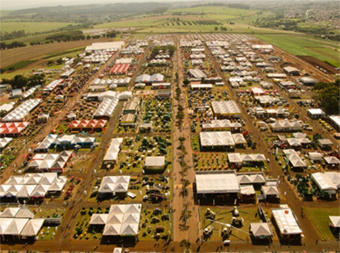
Murilo Meyer, Eng. agrônomo, M.SC.  e diretor da MMeyer  Consultoria Ambiental esteve em Ribeirão Preto-SP de 28 à 30 de abril/2014 para o AGRISHOW 2014 que foi realizado de 28 de abril a 2 de maio de  2014. A Agrishow é uma das maiores e mais completas feiras de tecnologia agrícola do mundo. É a única feira do Brasil que conta com a presença de pequenos, médios e grandes fabricantes. Uma feira em que é possível encontrar uma enorme variedade de produtos e serviços que atende a todos os produtores rurais independente do tamanho da propriedade e cultura. Um ambiente de atualização profissional, lançamentos, divulgação das próximas tendências do setor e onde grandes tecnologias são de fato demonstradas durante o evento. glob"Penso ser  a maior feira de equipamentos e implementos agrícolas que já visitei. O que você necessitar para produzir no campo com certeza encontrará na Agrishow. Tecnicamente a feira foi muito importante para divulgar a Plataforma ClimaVista Agro e buscar novas parcerias com as mais de 15 empresas de Agricultura de Precisão, presentes no Evento." - conclui Murilo Meyer.
Ver mais
27 mar, 2014

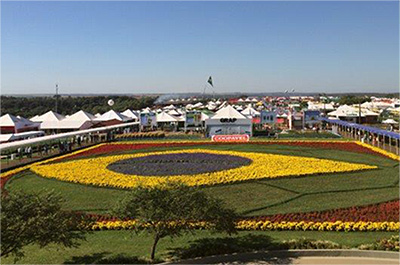
Murilo Meyer, Eng. agrônomo, M.SC.  e diretor da MMeyer  Consultoria Ambiental esteve em Cascavel (PR) para o Show Rural Coopavel 2014 que foi realizado de 3 a 7 de fevereiro de  2014. O Show Rural Coopavel é uma mostra eminentemente tecnológica promovida pela Coopavel Cooperativa Agroindustrial.  O evento que começou como um dia de campo em 1988, abre o calendário anual de feiras agrícolas, como uma das maiores feiras do Brasil. E, desde sua criação, tem como principal objetivo a difusão de tecnologias voltadas ao aumento de produtividade de pequenas, médias e grandes propriedades rurais. . Durante a visita, foi ciceroneado por seu colega da Agronomia, Eng. Agrônomo  Helmuth G. Bleil Jr., responsável pela Fazenda Escola do Curso de Agronomia da FAG - Faculdade Assis Gurgacz. O principal objetivo do encontro  foi conhecer a potencialidade daquela região e do evento em relação a Plataforma ClimaVista Agro, que é a Plataforma integrada de monitoramento da lavoura e de previsão climática, da qual a MMeyer Consultoria Ambiental é distribuidora exclusiva para o Brasil. . 1a “Saí  muito bem impressionado, tanto com a grandeza do evento e pela sua excelente organização e pela completa representatividade dos diferentes segmentos do setor Agrícola Brasileiro, quanto pela aceitação e interesse dos participantes  em integrar informações climáticas confiáveis na sua tomada de decisão e portanto no gerenciamento da produção. Sejam empresas de tecnologia, de sementes, de químicos, todos dependem também de uma informação climática confiável, para obter melhores resultados!!” – destaca o Eng. Murilo Meyer.     O principal objetivo do Show Rural Coopavel é a difusão de tecnologias voltadas ao aumento de produtividade de pequenas, médias e grandes propriedades rurais. Alguns números de 2014:

Visitantes 210.144
Experimentos 5.050
Área do evento 720.000m²
Expositores 440
Apresentações técnicas 250
Estacionamento gratuito mais de 7.000 vagas

Ver mais

eco.clima.sol.mmeyer-1

Em parceria com o Núcleo de Estudos em Monitoramento e Avaliação Ambiental (NUMAVAM), grupo de pesquisas credenciado junto à Universidade Federal de Santa Catarina (UFSC), e com a EcoClimaSol, empresa argentina especializada na implantação de soluções ambientais, a MMeyer Consultoria Ambiental apresenta o Plano Clima Energia Territorial (PECET), que se constitui em uma nova metodologia para o gerenciamento de eventos indesejáveis associados à dinâmica climática.


De acordo com Sandro Schlindwein, um dos membros do NUMAVAM, o objetivo dessa parceria é complementar competências para melhor possibilitar a elaboração e acompanhamento da implementação do Plano Clima Energia Territorial. “O PCET pode ser entendido como uma plataforma para a integração territorial de ações estratégicas voltadas à redução da vulnerabilidade de sistemas de atividades humanas frente ao clima atual e futuro, envolvendo distintos setores da sociedade. Trata-se, portanto, de uma forma de orientar ações e investimentos para evitar e reduzir os danos causados por eventos climáticos às atividades humanas”, explica Sandro.


Para Jean-Philippe Boulanger, que representa a empresa argentina EcoClimaSol, a abordagem que orienta a elaboração e desenvolvimento de um PCET envolve compreender o sistema territorial como um todo, definindo seus agentes e a forma como interagem, considerando as diferenças sociais, econômicas e também políticas, permitindo a identificação de fatores comuns que podem ser trabalhados proativamente a fim de enfrentar adequadamente possíveis e inevitáveis eventos climáticos desfavoráveis, como chuvas intensas que podem provocar enchentes e estiagens. “O plano elaborado por meio desta parceria, nos permite desenvolver uma visão e uma ação comum, para que possamos enfrentar desafios como a adaptação às alterações climáticas, trabalhando para a redução das emissões de gases que contribuem para o efeito estufa e também da dependência dos combustíveis fósseis”, comenta Jean Philippe.


O PCET é uma ferramenta inovadora de gerenciamento de questões climáticas e de coordenação de medidas mitigadoras do impacto de eventos climáticos extremos, resultando na:


●   Redução de impactos sobre o meio físico e sobre a sociedade;

●   Conservação de florestas e manutenção de áreas de preservação permanente;

●   Efetividade de execução de projetos ambientais.


Segundo o engenheiro agrônomo Murilo Meyer, da MMeyer Consultoria Ambiental, a utilização de metodologias inovadoras como o PCET para o gerenciamento de questões climáticas na execução de projetos ambientais, é uma forma de ampliar ganhos e facilitar a tomada de decisões por parte das organizações e dos agentes envolvidos no processo.

    clima-vista-agro     Conheça também os produtos ClimaVista® Agro, direcionados para a agricultura.

Ver mais

MMeyer Consultoria Ambiental aposta em planejamento estratégico proativo na obtenção de bons resultados

No atual cenário corporativo, as práticas de gestão ambiental são fator que diferencia e destaca a atuação das empresas. Além da adequação a padrões estabelecidos por lei, a importância da conscientização ambiental e de ações sustentáveis aparece como fator determinante para que as empresas invistam nas políticas ambientais. Na análise do empresário e consultor ambiental da MMeyer Consultoria, Murilo Meyer, é perceptível a demanda crescente de profissionais se especializando na área de gestão ambiental. Para ele, as empresas também estão cada vez mais conscientes da necessidade e da importância de contratar consultorias especializadas no setor.


No entanto, como destaca, ainda, o especialista, o grande porém é que muitas vezes os consultores acabam somente tratando de situações e ou problemas pontuais. Murilo defende que é fundamental aproveitar o trabalho de consultoria para o desenvolvimento de um planejamento estratégico ambiental, que atue de forma preventiva e faça parte da rotina da corporação. “As empresas devem agir proativamente, evitando que problemas aconteçam. O ideal é que a consultoria assessore e acompanhe efetivamente a gestão ambiental, desenvolvendo ações rotineiras e dando indicativos de como agir perante as situações”, comenta.


Outra vantagem colocada pelo empresário no trabalho das empresas especializadas é o foco em inovação e aperfeiçoamento. Além de estarem sempre buscando novos nichos de mercado, os consultores precisam se atualizar constantemente perante as novas demandas impostas pelos órgãos competentes; que tem como um dos pontos fundamentais de diferenciação, por exemplo, a ampliação do leque das atividades potencialmente poluidoras. “A Legislação está em constante evolução e cada atividade tem um procedimento diferente de licenciamento. Isso exige um acompanhamento e um preparo específico que vão estar na linha de atuação de uma empresa especializada”, ressalta o empresário.


Com essa filosofia de desenvolvimento efetivo de políticas de gestão ambiental, a Mmeyer Consultoria Ambiental atua a 12 anos no mercado, oferecendo aos clientes soluções eficazes com ética, credibilidade e profissionalismo. A transparência dos procedimentos realizados durante os processos de licenciamento de obras junto aos órgãos competentes e o apoio de profissionais altamente capacitados são outros fatores que constroem a história de confiança e os casos de sucesso no desenvolvimento de políticas ambientais, destacando o trabalho da MMeyer em sua área de atuação.


Saiba mais


Dispondo de consultores independentes, habilitados e com grande experiência, a MMeyer Consultoria Ambiental está apta a prestar serviços de qualidade, atendendo plenamente as necessidades de seus clientes. Confira as principais frentes de trabalho da empresa, que atua sob a responsabilidade do Engenheiro Agrônomo Murilo Meyer, mestre pelo programa de Engenharia de Produção e Sistemas da UFSC; na área de concentração de Gestão e Qualidade Ambiental


●   Diagnósticos, laudos técnicos e perícias ambientais;


●   Licenciamentos, EIA-RIMA;


●   Estudo de Impacto de Vizinhança (EIV);


●   Implantação de Sistemas de Gestão Ambiental – ISO 14001,


●   Auditorias ambientais,


●   Recuperação de áreas degradadas,


●   PBA’s e planos de manejo, criação de Unidades de Conservação e RPPN’s


Fonte

Ver mais

Ùltimas Notícias